Time is money when it comes to the internet. Studies have found that more than half of web surfers will leave a webpage that fails to load within the first three seconds, and big, non-compressed image files are the number one reason why webpages fail to load quickly. This is a crucial skill for anyone who operates a website or online shop, creates online content, or even just needs to send a picture in an e-mail without the message coming back with the message that the image file size exceeds the maximum size allowed.
With the help of ImageProEdit's free Reduce Image Size application, you can resize your photos and pictures right through your browser without having to install any software or creating an account. Simply upload your picture and reduce its size in kilobytes (KB), and then download the resized picture instantly. Everything is completely private, fast and FREE!
Why Reducing Image File Size Matters
Larger image sizes have consequences in almost every aspect of digital technology, including but not limited to website speed, search engine ranking, and mobile data usage. Gaining insight into why the size of your images is significant allows you to make more intelligent choices regarding your images.
Page Speed and SEO Rankings
Images tend to be the biggest assets in any web page, usually representing 40 to 44 percent of the total weight in terms of bytes of the web page. The Google Core Web Vitals are the set of performance metrics that are used in the search ranking algorithm by Google and among them is Largest Contentful Paint (LCP). LCP refers to how fast the largest visible asset is loaded on the web page. This asset is mostly an image. Large uncompressed images negatively impact the LCP score.
The advice that the SEO experts give regarding image size is clear cut, it is best to try and keep your images on the web site under 100 KB where possible, or at the very least, under 200 KB if the image is a hero or banner image. Photos that one takes using a camera or a smart phone will typically be around several megabytes, in some cases 5 MB or even more.
Email Attachment Limits
It is usual for most email providers to set a limit for the size of an attachment to somewhere between 10 and 25 megabytes, and some corporate emails have more stringent limits than that. If you attempt to attach a picture of high resolution in your email, chances are it will be too big and not sent at all or accepted by the receiving server. To make sure of avoiding such incidences, it helps to reduce the picture to KB.
Cloud Storage and Upload Quotas
The social media platforms, cloud storages, content management systems, and even the file sharing sites all have restrictions when it comes to uploading huge files. Most of the social media sites like Instagram and LinkedIn automatically compress the photos once you upload them. So it is better if you compress your photos to a suitable size prior to uploading so that you retain the quality of your photos.
Mobile Data Efficiency
Much of the traffic to websites happens via mobile devices, which may have limited data capacity. Sites that are full of uncompressed images use much more mobile data, making browsing on the mobile device slower for the user and expensive for the user’s data. Compressed images are an ethical approach, putting users first.
Understanding Image Compression: Lossy vs. Lossless
It is not always true that image compression techniques function in the same manner. Familiarity with two kinds of image compression, namely lossy and lossless image compression, will help in making an informed decision.
Lossy Compression
The lossy format reduces the size of files by getting rid of some information from the images; particularly those elements that are least noticeable by the human eye, such as color subtleties, high frequency, and fine noise. The end product is a smaller file, and at standard compression rates, it is indistinguishable from the original. The disadvantage of this method is that once the information is lost, it is irretrievable, and if compression is overdone, there will be artifacts.
The JPEG format is the most popular lossy format and is considered the standard image format for photos and complicated pictures that are meant to be published on the internet. When using a relatively high level of compression, JPEGs can be compressed to between 70% to 90% of their original size without any noticeable drop in image quality. The best combination of file size and image quality is achieved through lossy compression of pictures on the web.
Lossless Compression
The process of lossless compression does not result in data loss. There is nothing removed during the process because all the pixels of the image remain intact after compression. The only downside to this method is that the amount of reduction in file size is not as significant as in the case of lossy compression.
PNG is the widely used lossless compression format. This is due to the fact that PNG is suitable for graphic images with clear edges, texts, icons, logos, illustrations, and other types of images where clarity is of paramount importance, irrespective of the size of the file. Screenshots should almost always be saved in PNG format since they will remain sharp and clear.
In most cases where you will be using photos on the internet, the JPEG format is ideal. Where the photos contain text or have sharp edges or logos or graphics, it is advisable to go for PNG format. The ImageProEdit Reduce Image Size is capable of handling both of these formats.
How to Reduce Image Size in KB Online
The entire process takes under thirty seconds for most images.
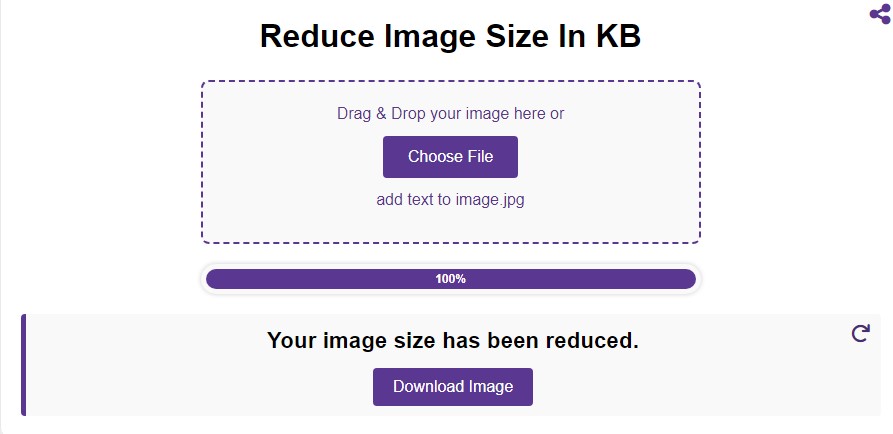
- Open the Tool: Go to compress image tool in any modern web browser on your device. No login is required.
- Upload Your Image: Drag and drop your image file into the upload box or use the “Browse” option to find and upload your image from your computer.
- Compress the Image: Press the “Reduce Size” button to compress the image. The tool will compress your picture and decrease its file size in kilobytes without decreasing the visual quality too much.
- Download the Compressed Image: Click "Download Image" to save the smaller file to your device. Check the file size to confirm the reduction meets your needs.
- Use Your Image: Simply upload the image on your website, send it via email, post it on social media, or use it anywhere else you need a smaller size. You can stop right there as no more editing is required.
Who Needs to Reduce Image Size?
There is a wide variety of individuals who will find themselves in need of reducing the size of image files measured in kilobytes. Nearly everyone dealing with digital images on a regular basis will run into this problem at some point.
Website Owners and Bloggers
All pictures that go online in either websites or blogs must be compressed before being uploaded. Pictures that have not been compressed are among the leading contributors to page loading delays, bad Core Web Vitals scores, and low ranking by search engines. One uncompressed hero picture can take up to several seconds for a web page to load, hurting the user experience and SEO performance. Image compression is one of the most efficient and easiest things that anyone can do to optimize their web pages.
Once images have been optimized for the web, another thing that many website owners like to do is beautify the image. For instance, one may want to add a border around an optimized image of the products or blog images to give the images a professional look.
E-Commerce Sellers and Online Store Managers
Product photography is the lifeblood of e-commerce. Good resolution product photos are necessary to present your products’ high quality, but you will need to compress them first before uploading them to an online shop, regardless of the platform, Shopify, WooCommerce, Etsy, Amazon, or others. Uncompressed product photos will load slowly and increase your bounce rate while the customer is still far away from checking out. Compression of product photos into a proper file size in KB can contribute directly to your sales results.
Social Media Managers and Content Creators
The reason for this is that social media networks use their own algorithms to compress images as soon as you upload an image. This way, by compressing the image beforehand to a decent file size, you minimize the chance that quality will suffer at the hands of the algorithm used by the social media network. If you plan to create any kind of social media content that uses effects or filters on images, then compressing those images is always a good idea.
Graphic Designers Preparing Assets for Delivery
Image designers often have to submit images that meet certain sizes for use by their clients, web developers, or producers. Images used in presentations, websites, social networks, and print formats require different sizes. The “Reduce Image Size” feature makes it easy to reduce an image’s size to the required kilobyte range in one step without launching a full-fledged design program.
Students, Academics, and Researchers
There are many instances where institutions of learning, scholarship sites, application forms submitted to government bodies, and university submission forms restrict users on the size of files that can be uploaded. An institution may have a requirement that you have to upload a picture not larger than 100 KB, a document that should not exceed 500 KB, or an attachment for a thesis paper that has to be within certain parameters – all of these are common. This is where the free compressing utility comes in handy.
Professionals Handling Documents and Scanned Images
Most professionals dealing with scanned documents, ID card images, certificates, or other forms of official documentation come to realize that scanned documents occupy more space than what is allowed by the portals or software where they have to upload such documents. File size limits are set by various portals and software applications such as those for HR management, banks, governments, and law, and are greatly exceeded by raw scans of documents. Shrinking the file size in KB makes such documents compliant instantly. When the document in question happens to have some written text in it, then the extract text from image feature allows extracting such text from the image.
Recommended Image File Sizes for Common Use Cases
Understanding the right file size for each application allows you to compress your images appropriately the first time around.
Website Hero Images and Full-Width Banners: Target below 200 KB when working with full width header images. These images are generally the largest on your web page and will have the most effect on the LCP metric and your load times. Full width header images at 1,280 to 1,920 pixel wide will comfortably fit below 200 KB.
Blog Post and Article Images: Ensure that images placed inside the body of blog posts are smaller than 100 KB in size. Images placed for illustrating articles, tutorials, and other stories don’t have to be high-resolution images because compression of these types of images does not affect their quality at all.
Social Media Images: Target 50 to 100 KB for most platform-specific images. Social platforms apply their own compression on upload, so delivering an already-compressed image in this range prevents double compression from degrading quality.
Email Attachments: Under 1 megabyte per image for regular email attachments, and under 500 kilobytes if you are sending multiple images in one email. This will keep the total size of your email within usual limits set by providers.
Profile Photos and Avatar Images: Shoot for file size between 20 and 50 KB when using pictures for profiles. Profile pictures appear in smaller dimensions and do not require large files to appear clear.
Government and Institutional Uploads: Always adhere to the stipulated guidelines provided for the particular form or website. The guidelines are very variable and range from 20 KB to 500 KB. Make sure you use the compression utility to fit the range.
Reducing Image Size vs. Resizing an Image: What Is the Difference?
These two terms are frequently confused, and the distinction matters.
Reducing image size (compression) refers to the process of reducing the size of an image file in kilobytes or megabytes without necessarily altering the pixel dimensions of the image. In other words, the image retains its original size in terms of pixel dimensions but takes up less space because of efficient encoding of the pixel data by the compression technique.
Resizing an image means making the image physically smaller or larger in terms of height and width. Resizing inherently makes the file size smaller as well because fewer pixels mean less information needs to be stored, but the main thing that is changed is the physical size of the image.
Both methods can help reduce the file size in kilobytes (KB), yet both do it by different ways, as well as have various effects on the picture. In case of web optimization processes, both actions are performed simultaneously: firstly, one needs to resize the image into the largest dimension, at which it will be displayed (cutting off unnecessary pixels that would just be disregarded by the browser), and then to compress it.
FAQs
Are my images uploaded to a server during compression?
No, because all compression will be performed on the client side in your own browser. There are no uploads to any remote server, nothing is saved anywhere, and your image data is deleted from the computer memory once you leave the website.
How much can I reduce an image's file size?
How much it can be reduced is influenced by the picture you started out with, its format, and its content. Pictures with color gradient complexities will always compress very well; they can usually achieve reductions of up to 50% to 90%. Once an image is compressed for the first time, it will result in less reduction during subsequent attempts.
Will compression make my image look worse?
In cases where there is only moderate compression, the difference in the quality of the two files cannot be seen by a human eye when viewing the image at typical sizes. In the case of excessive compression, various artifacts, including blocking and color banding, may be noticed.
What is the difference between reducing image size and resizing an image?
File size reduction due to compression does not affect the actual pixel measurements, while resizing does change the pixel measurements of the image. Both techniques may be used for reducing file size, but in different ways. When optimizing for the web, both techniques can be used together.
Is there a watermark on the downloaded compressed image?
No. No watermark is added to any image that you download via the ImageProEdit compression tool.
Why do social media platforms make my images look different after uploading?
There is always an automatic compression by social media sites whenever an image is uploaded. When one uploads a big image which is not compressed, its compression will affect its quality since it works hard to compress the big image. Compressing an image to a manageable size before its upload allows one to manage the quality of the image.
How do I know what file size to target?
The right selection will depend on your need. For website images, go for less than 100 KB for normal pictures and less than 200 KB for larger hero banners. For attachments used in emails, go for less than 1 MB for each picture. For social media usage, go for 50 to 100 KB. For institutions and government forms, be sure to look at what the form specifies. It is always safe to opt for smaller images in web applications as long as the image looks good.
Can this tool help with images I need to upload to government or institutional portals?
Yes. Government websites, banks, scholarship application forms, and institution registration forms all ask for an image to be within a certain file size limit. This software will reduce your image into the specified kilobyte size very quickly and does not need any special software.